Every Therapy We Offer, Explained Clearly
From hands-on manual therapy to sports rehabilitation — here's what each treatment involves, who it helps, and what to expect.
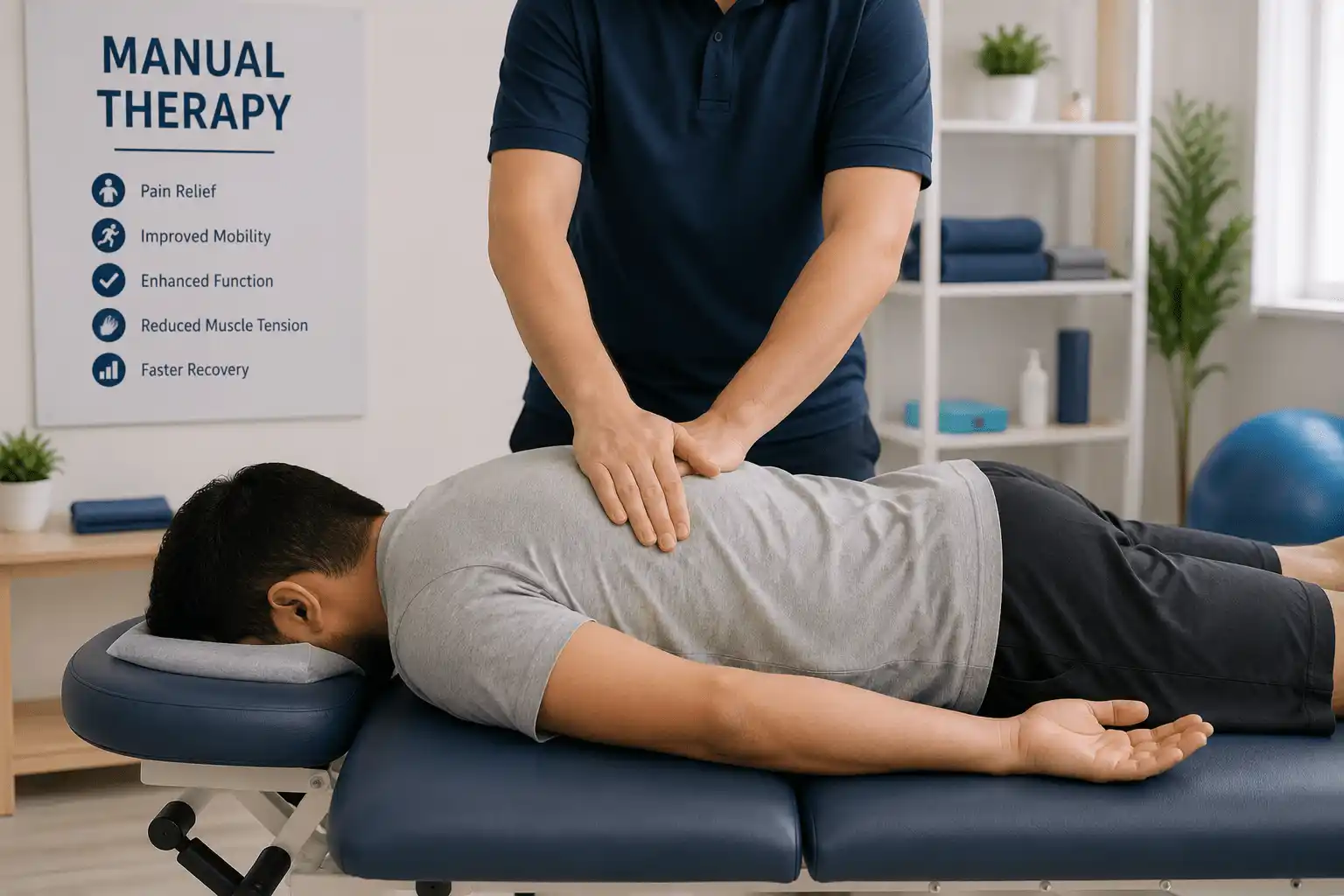
Manual Therapy
Hands-on joint mobilisation, myofascial release and soft-tissue techniques that restore movement and ease pain directly at the source.
Who It's For
Stiff joints, muscle tightness, restricted mobility, chronic tension.
Recovery Time
2–4 sessions to notice initial relief
Benefits
- Improves joint range of motion
- Reduces muscle stiffness
- Relieves referred pain
- Speeds up tissue healing
Manual therapy sessions typically last 30–45 minutes and are gentle unless a specific technique requires deeper pressure — which we always explain beforehand.
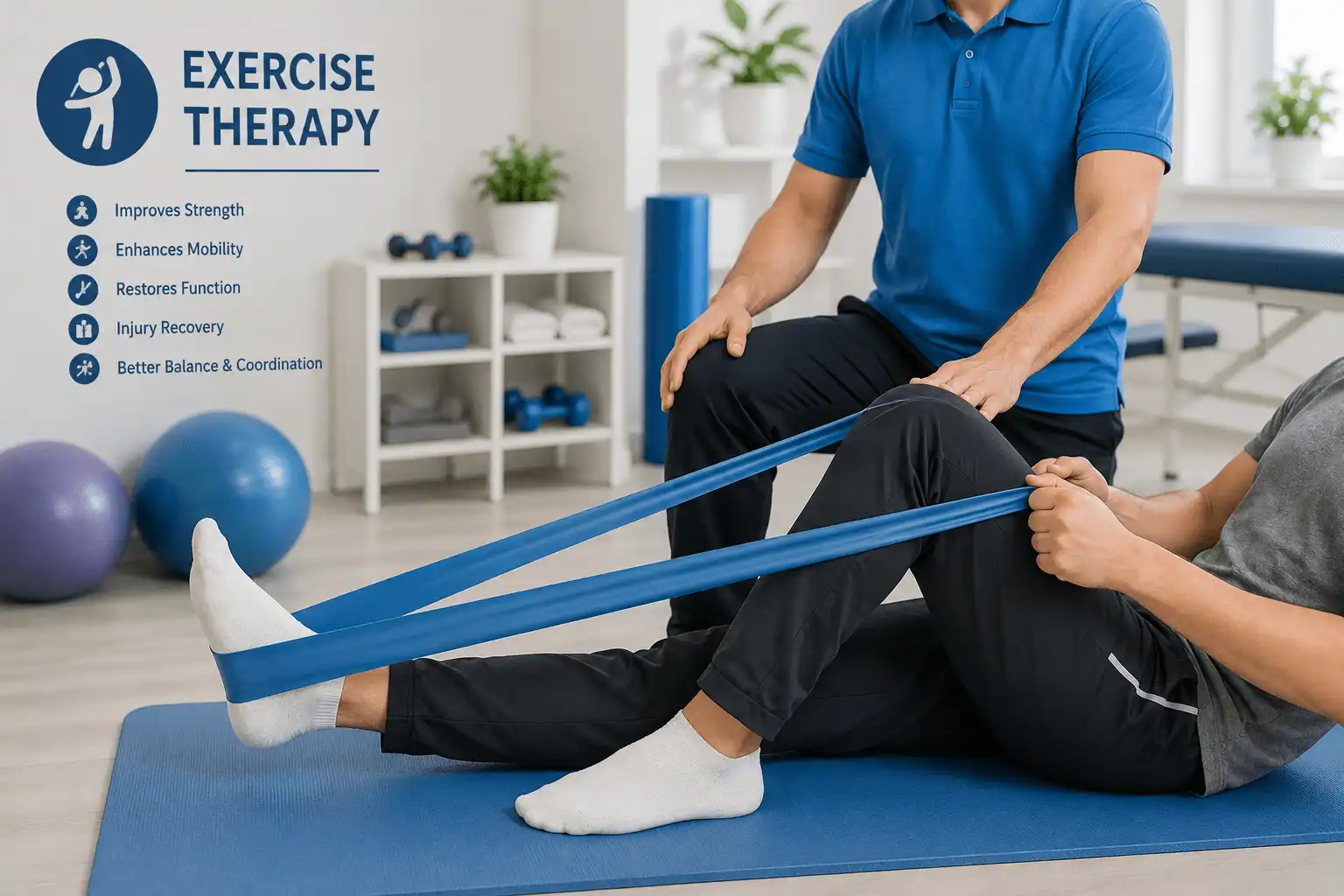
Exercise Therapy
A progressive, structured exercise program that rebuilds strength, balance and flexibility at a pace matched to your recovery stage.
Who It's For
Post-injury weakness, poor posture, general deconditioning, long-term prevention.
Recovery Time
Ongoing — reassessed every 2 weeks
Benefits
- Builds functional strength
- Improves balance and coordination
- Prevents re-injury
- Boosts long-term mobility
Exercises are demonstrated and supervised in-clinic first; a home program is added once your form and tolerance are confirmed.
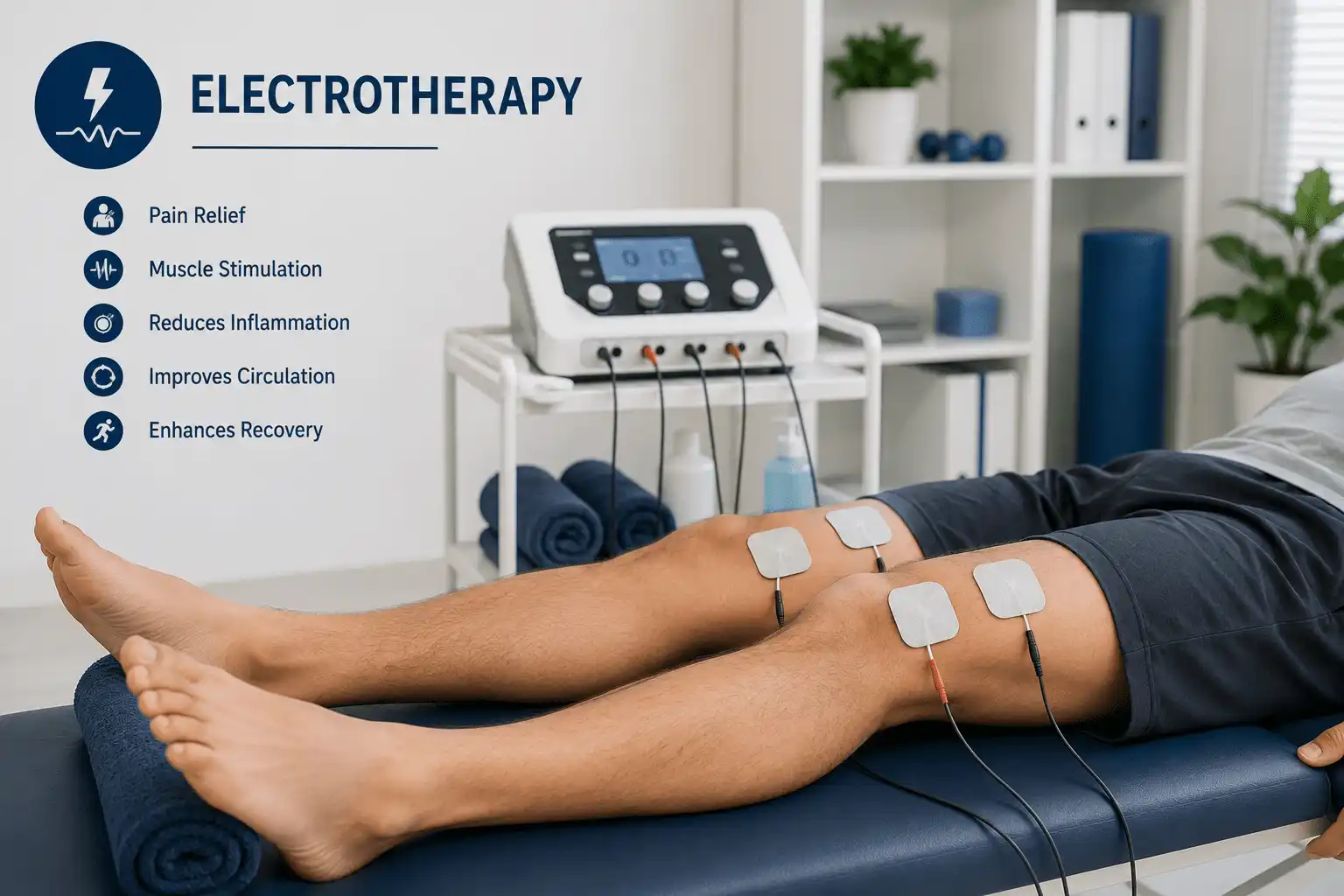
Electrotherapy
Controlled electrical stimulation (TENS/IFT) used to reduce pain, ease inflammation and support faster tissue recovery.
Who It's For
Acute pain flare-ups, inflammation, muscle spasm, nerve-related pain.
Recovery Time
Relief often felt within the first session
Benefits
- Fast, non-invasive pain relief
- Reduces swelling
- Relaxes muscle spasm
- Complements manual therapy
The sensation is a mild tingling, not shocks. Intensity is fully controlled and adjusted to your comfort.
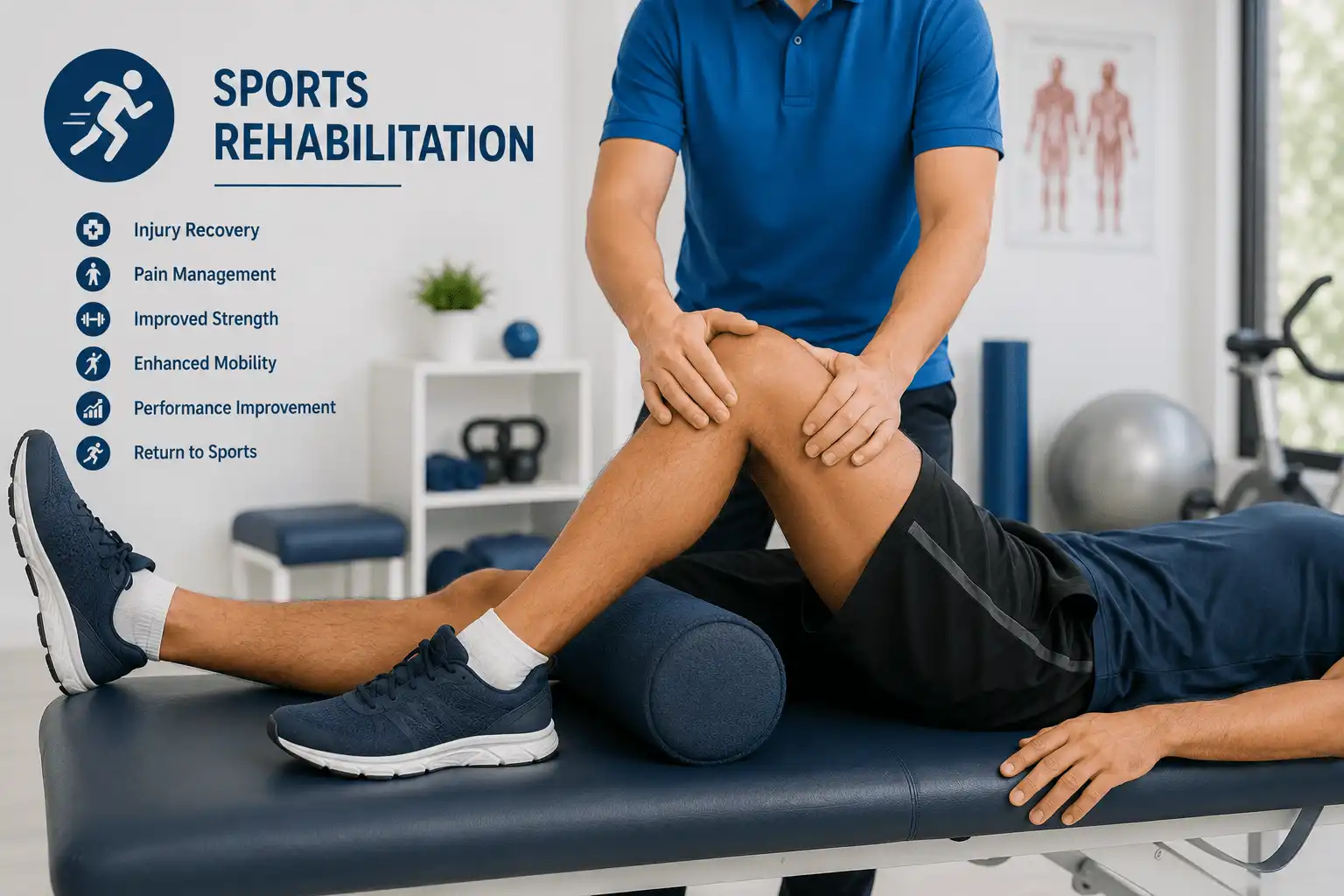
Sports Rehabilitation
Injury-specific rehabilitation protocols that safely return athletes to training and competition — with strength and confidence intact.
Who It's For
ACL/ligament injuries, muscle strains, sprains, overuse injuries.
Recovery Time
6–12 weeks depending on injury severity
Benefits
- Sport-specific movement training
- Reduces re-injury risk
- Restores peak performance
- Structured return-to-play plan
Yes — we design return-to-sport milestones so you know exactly when it's safe to resume training and competition.
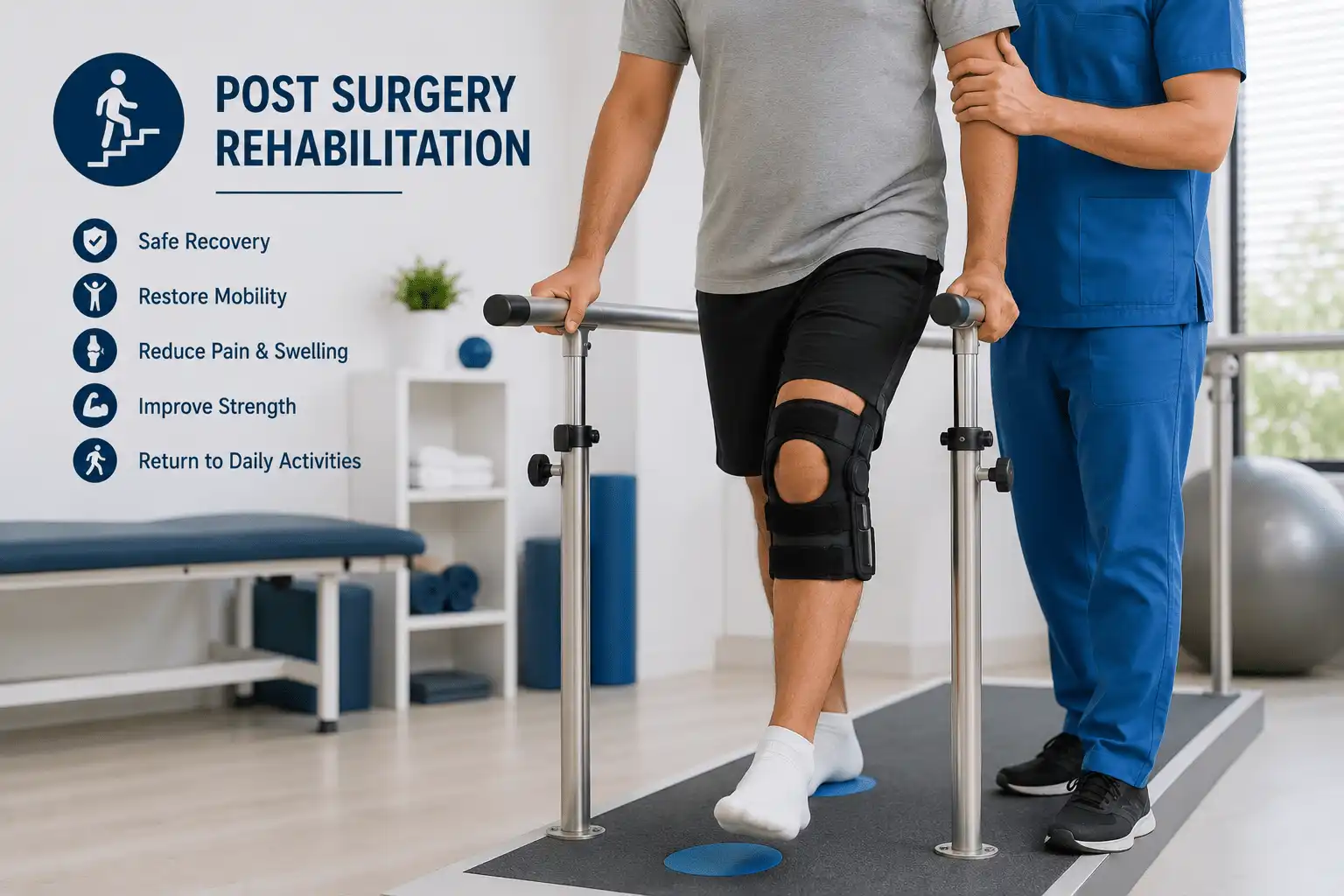
Post Surgery Rehabilitation
Guided recovery protocols following orthopaedic or neurological surgery, focused on safely restoring movement and independence.
Who It's For
Joint replacement, ligament repair, spinal surgery, fracture recovery.
Recovery Time
Varies by procedure — plan set after assessment
Benefits
- Prevents post-surgical stiffness
- Restores strength safely
- Reduces scar tissue restriction
- Coordinated with your surgeon's protocol
We follow your surgeon's post-operative guidelines closely and coordinate timing so therapy supports, not conflicts with, your surgical recovery.
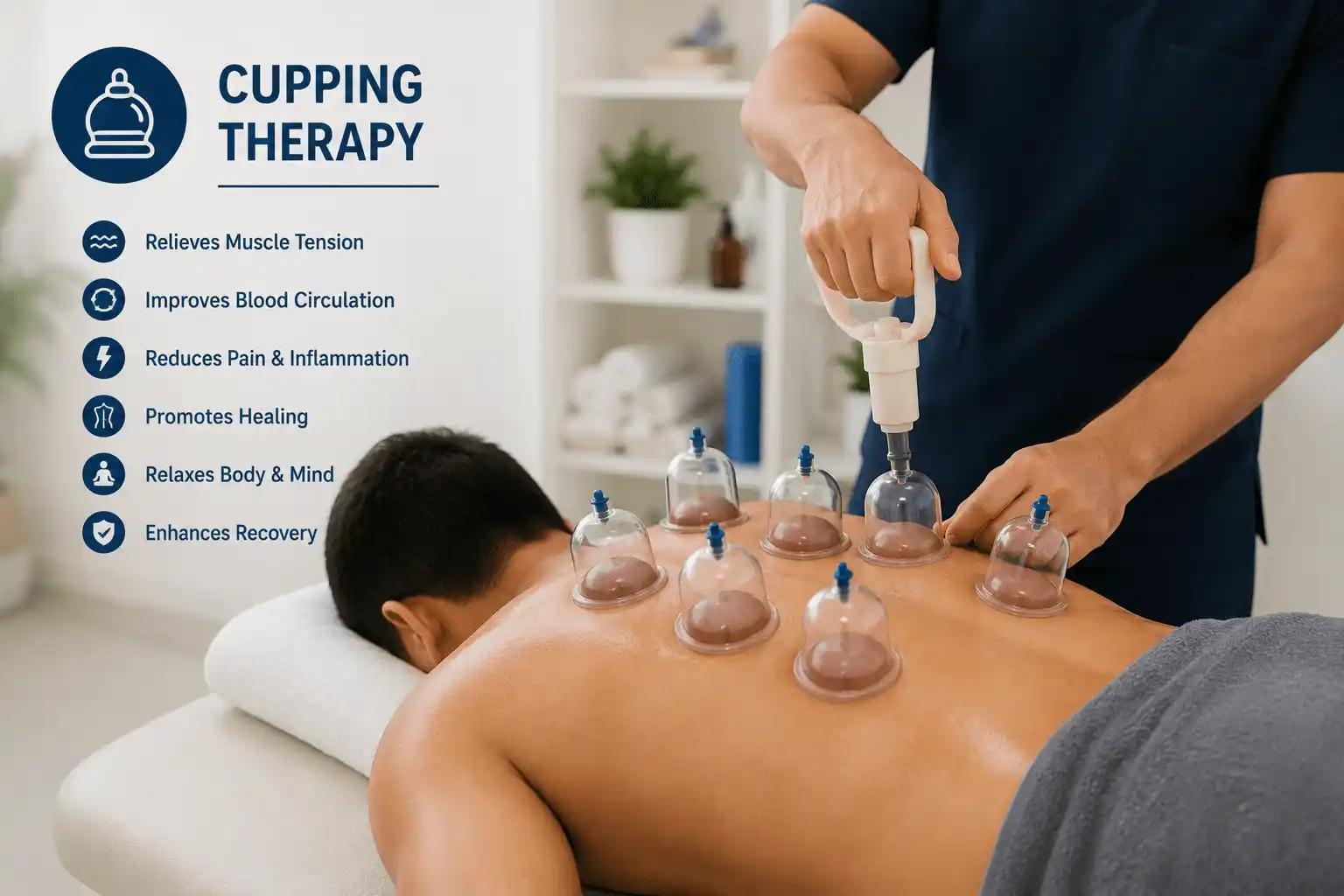
Cupping Therapy
Traditional suction-based therapy that improves local blood flow, releases tight fascia and eases deep muscular tension.
Who It's For
Chronic muscle tightness, poor circulation, tension headaches, back tightness.
Recovery Time
Relief typically felt same-day
Benefits
- Improves blood circulation
- Loosens tight fascia
- Reduces muscular tension
- Complements manual therapy
Mild, temporary circular marks can appear and usually fade within a few days — this is a normal response, not bruising from injury.
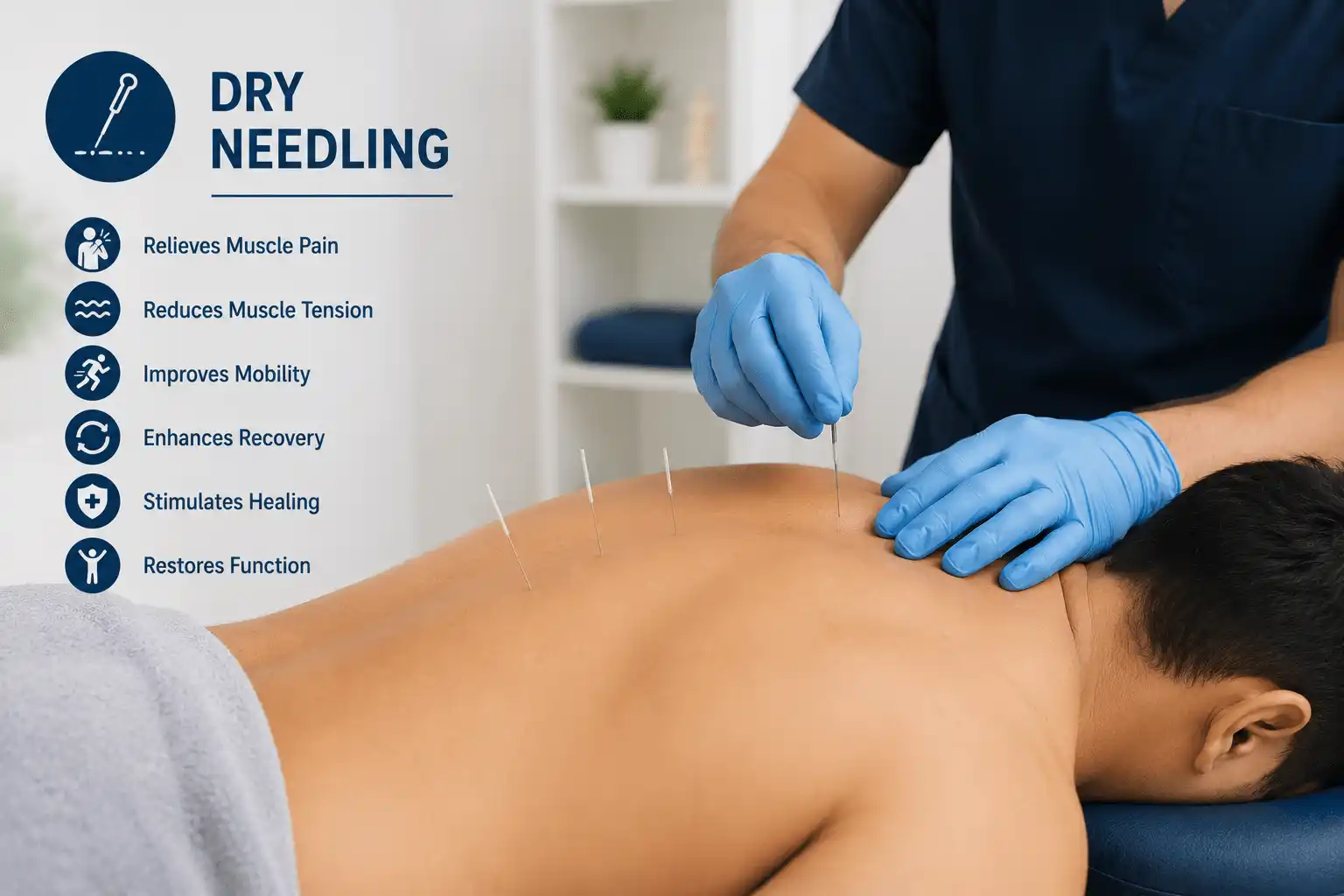
Dry Needling
Precise trigger-point needling that releases deep, stubborn muscle knots that manual therapy alone can't always reach.
Who It's For
Trigger points, chronic muscle knots, tension-related pain.
Recovery Time
Mild soreness for 24–48 hours is normal
Benefits
- Releases deep trigger points
- Reduces referred pain patterns
- Improves muscle flexibility
- Often combined with exercise therapy
Dry needling uses thin, sterile filament needles and is performed only by trained professionals — most patients feel a brief twitch, not pain.
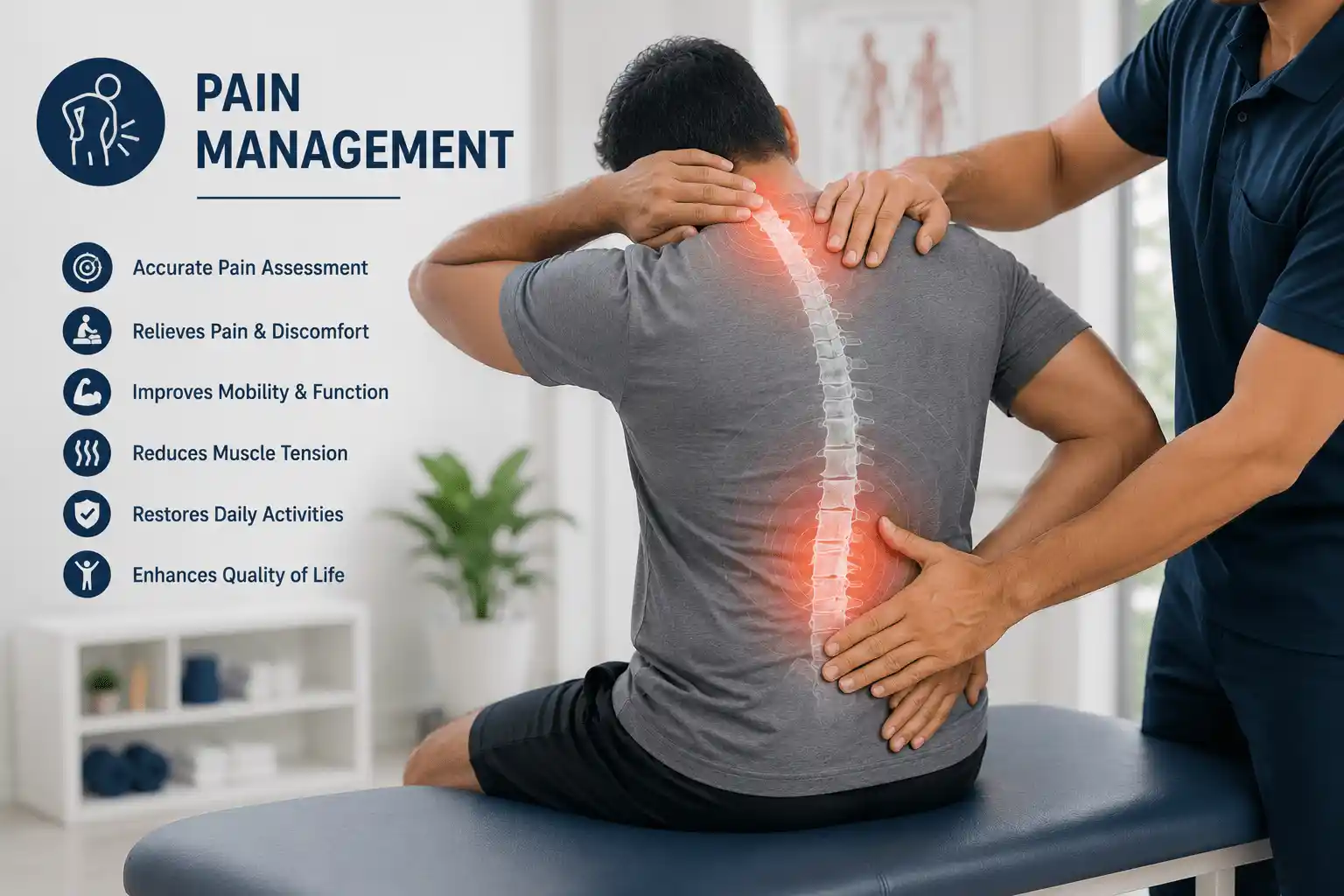
Pain Management
Evidence-based, non-invasive strategies to manage both acute and chronic pain without relying on long-term medication.
Who It's For
Chronic pain conditions, arthritis, fibromyalgia-type presentations, persistent discomfort.
Recovery Time
Ongoing, with milestones reviewed monthly
Benefits
- Reduces reliance on painkillers
- Combines multiple therapy techniques
- Improves daily function
- Focuses on long-term relief
We build a combination plan — often manual therapy, exercise and electrotherapy together — tailored to how your pain responds over time.
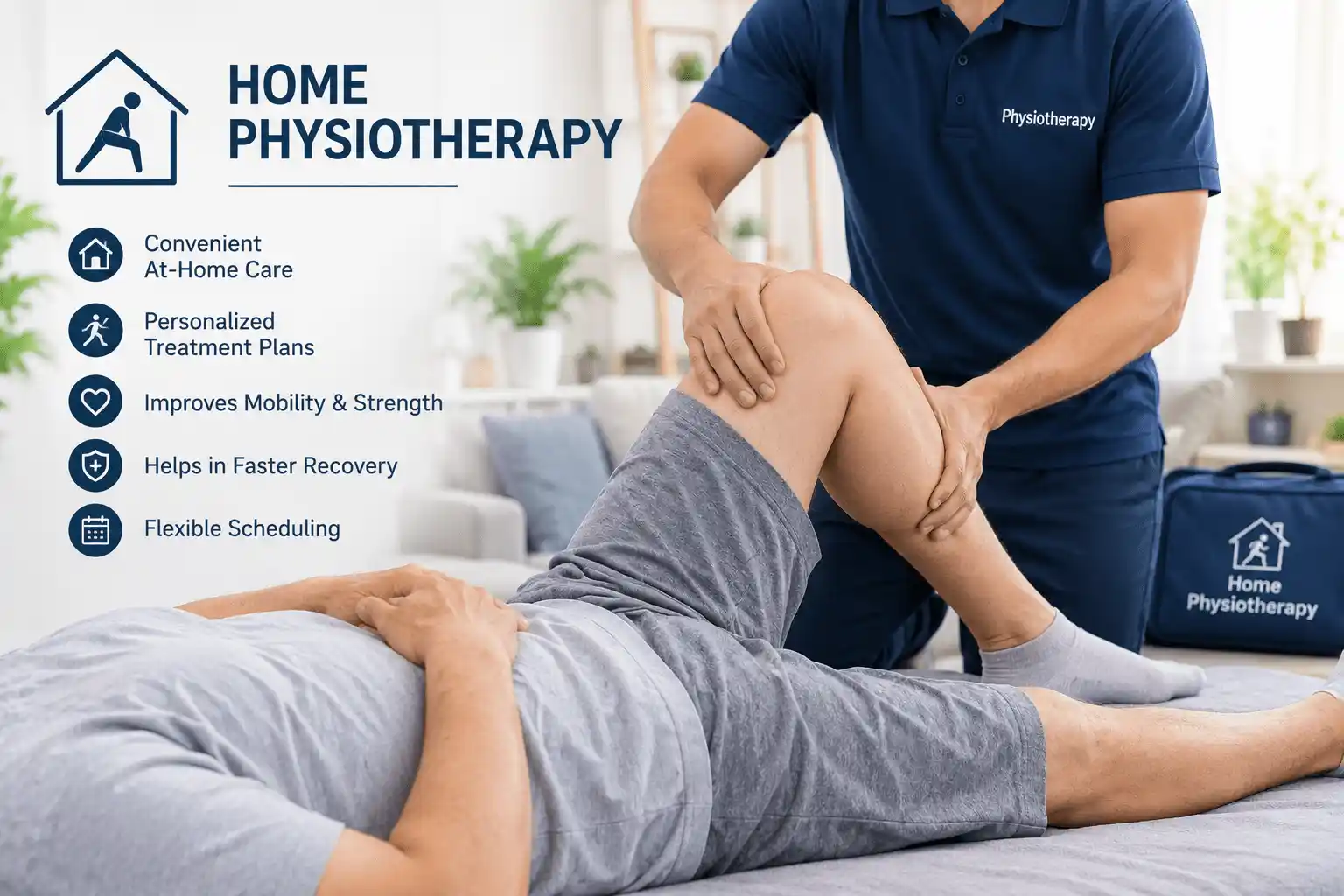
Home Physiotherapy
Full physiotherapy sessions delivered at your doorstep for patients who cannot travel to the clinic.
Who It's For
Elderly patients, post-surgery immobility, severe mobility restriction.
Recovery Time
Plan set after an initial home assessment
Benefits
- No travel required
- Comfortable, familiar environment
- Same quality of care as in-clinic
- Flexible scheduling
Yes — we bring portable equipment for most treatments. For sessions requiring clinic-based machines, we'll advise in advance.